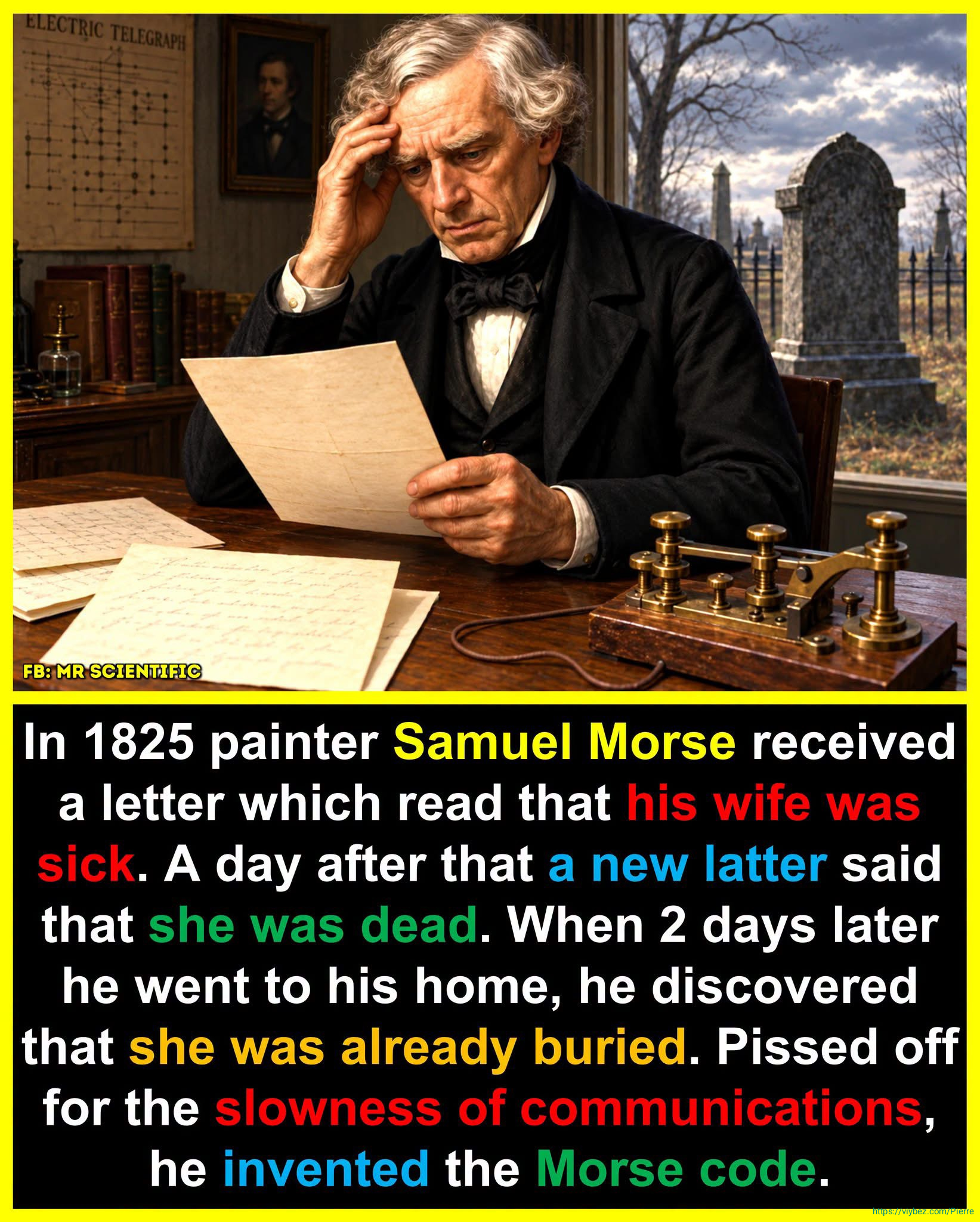
In February 1825, American painter Samuel Morse was in Washington, D.C., working on a portrait of the Marquis de Lafayette.
Back home in New Haven, Connecticut, his wife, Lucretia Pickering Walker Morse, was recovering after giving birth to their third child when she suddenly died on February 7, aged just 25.
Her father-in-law sent Samuel a letter announcing her death, but communication depended on physical mail and travel.
By the time the devastating news reached him and he returned home, Lucretia had already been buried.
He had been completely unaware that his wife had died while he was away.
The experience is often described as the personal tragedy that inspired Morse to develop faster communication. However, the connection is not definitively established.
In 1832, a conversation about electromagnetism aboard a ship returning from Europe sparked his interest in the electrical telegraph.
Working with collaborators, including Alfred Vail, Morse developed the telegraph and its famous dot-and-dash code.
On May 24, 1844, he transmitted the historic message "What hath God wrought?" from Washington to Baltimore.