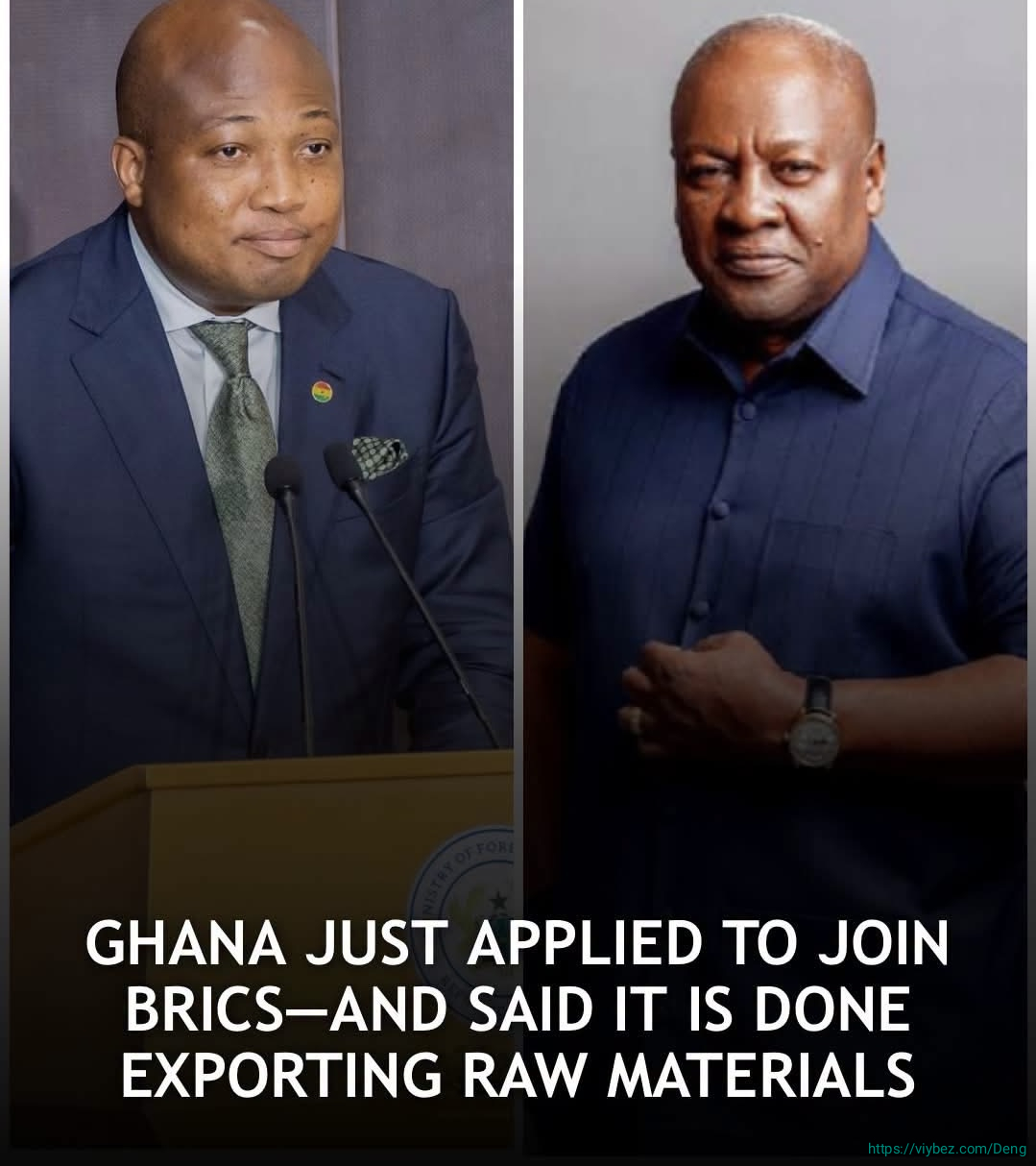
Ghana just told the world it is done being a raw material supplier. The Cabinet of President John Dramani Mahama has approved a formal application to join BRICS.
Foreign Minister Samuel Okudzeto Ablakwa announced the decision in Accra on October 6, 2026, during a joint press briefing with India’s External Affairs Minister, Dr. Subrahmanyam Jaishankar. “The Cabinet of President John Dramani Mahama has decided that Ghana should put in a formal application to join BRICS,” he said.
The reason was not diplomatic. It was economic, and it was specific.
“We want resource sovereignty, where we can be treated as equal partners,” Ablakwa said. “We don’t want a situation where we continue to export raw materials. We want to add value to the natural resources that we have”.
That is not a slogan. It is a receipt. Ghana’s Trade Minister, Elizabeth Ofosu-Adjare, disclosed in April 2026 that the country loses $2.5 billion every year simply because it exports its agricultural produce in raw form instead of processing it first. Cocoa leaves as beans. Cashews leave as nuts. Rubber leaves as latex. The value is added somewhere else, by someone else, and Ghana never sees it.
The Mahama government has already started closing that gap. Raw cashew exports are banned. Raw shea nut exports are banned. Raw rubber exports are banned. A gold refinery deal was signed in May 2026 to stop raw gold from leaving the country. The BRICS application is the next step. It is Ghana saying it will choose its own partners for the value-added economy it is building.
Ablakwa was clear that this does not mean abandoning the IMF or the World Bank. “We want to have options,” he said. “We value that relationship, but we must have new friends”.
India welcomed the move. Jaishankar said New Delhi has “always been very sympathetic and supportive of Ghana’s aspirations,” though he noted membership requires consensus among all BRICS members.
Ghana is not asking permission to be sovereign. It is telling the world where it is going next.
#Ghana #BRICS